
Academy | Calculation | Critical Variations | CCT Example #1
We always start by observing the CCT moves (checks, captures, and threats) from our opponent’s perspective, as this provides important context for our own moves.
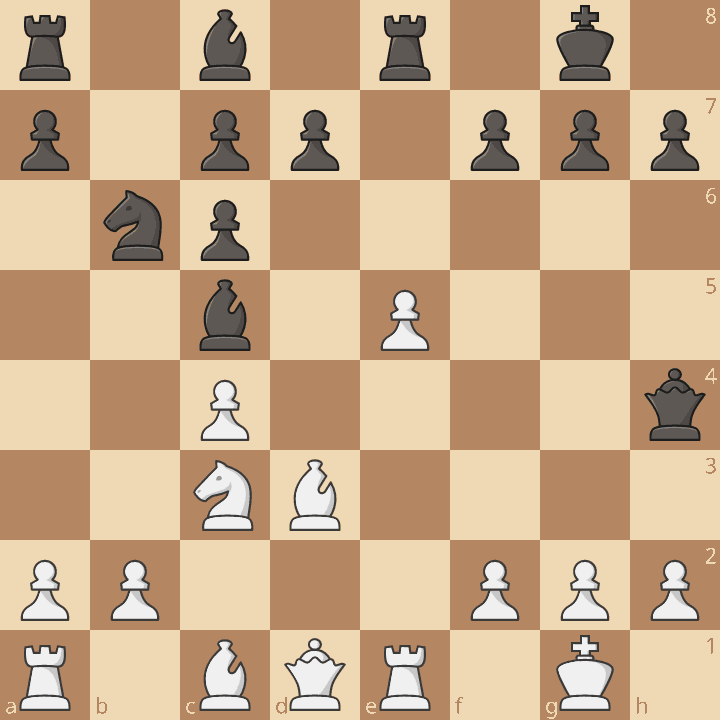
CCT Observations
- Black’s CCT moves are 1… Qxf2+, 1… Qxh2+, 1… Bxf2+, 1… Rxe5, 1… Nxc4 (supported by the queen on h4), or 1… Ba6.
- We can quickly discard 1… Rxe5 because we can simply capture their rook. 1… Qxh2+ loses the queen. 1… Ba6 is also not a problem since b3 provides an easy defense.
- Therefore, the real threats are 1… Bxf2+, 1… Qxf2+, and 1… Nxc4.
- Based on our understanding of Black’s threats, the main moves we should consider are 1. Be3 (threatening Bxc5), 1. Ne4 (threatening Nxc5 AND defending f2), or 1. g3 (defending f2 and attacking black’s queen). We can quickly discard 1. Bxh7+ or 1. Bg5 because we would simply lose material without any clear compensation.
- 1. Re4 might be worth a second look, but we’ll skip it for now since it allows 1… Qxf2+
- White has well over 30 legal moves in this position, but we have pruned them down to just three moves worth considering: 1. Be3, 1. Ne4 or 1. g3.
Note: The goal of these exercises isn’t to find the best move, but to show how the CCT Method helps you identify the critical variations worth calculating. In other exercises, we will focus on actually performing the calculations.