Academy | The 7 Fundamental Skills
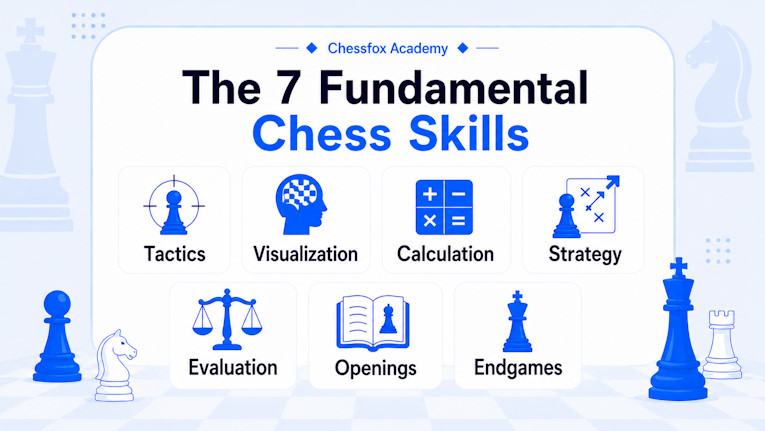
Here’s a quick overview of the seven fundamental chess skills. You’ll explore each one more fully in the coming lessons.
Tactics
The ability to recognize tactical patterns and opportunities during your own games. This skill is important because many games are decided by who spots the tactic first.
Visualization
The ability to see moves and future positions clearly in your head without moving the pieces. This is important because accurate visualization supports both calculation and tactical awareness.
Calculation
Practicing a structured calculation method helps you calculate variations more clearly and reliably. This matters because chaotic calculation often leads to oversights and missed tactics.
Strategy
The ability to find ways to improve your position when no immediate tactic is available. This is important because most chess positions do not have a clear tactical solution. It relies on your understanding of chess principles and positional ideas.
Evaluation
The ability to judge the strengths, weaknesses, and overall balance of a position. This helps you choose useful candidate moves when there is no immediate tactic, and evaluate whether each move actually improves your situation.
Openings
The ability to play sound chess from the start of the game by following opening principles and objectives. This helps you reach a playable middlegame without relying on memorization.
Endgames
The ability to convert or defend common endgame situations because you have practiced similar positions. This helps you play the endgame with greater confidence and accuracy.
Train the Skills That Matter Most
The purpose of Chessfox Academy is to help you train the skills that will have the biggest impact on your actual gameplay.
Instead of filling your head with large amounts of chess theory that may sound interesting but do little to improve your results, the focus is on developing practical skills you can rely on during real games. The goal is to help you think more clearly and play stronger chess through simple, effective training.