
Academy | Calculation | How Deep to Calculate
When calculating variations, aim to go until there are no more checks, captures, or threats, or until the position becomes clearly good or clearly bad. You usually don’t need to calculate beyond that point, as you then have the information you need to make a decision.
Remember, assuming your opponent will make weak moves—called hope chess—is something strong players avoid! When calculating, always try to anticipate your opponent’s strongest resistance.
Example: How Deep to Calculate
Note: In the position below, Black is already slightly behind in material, so they want to avoid equal exchanges.
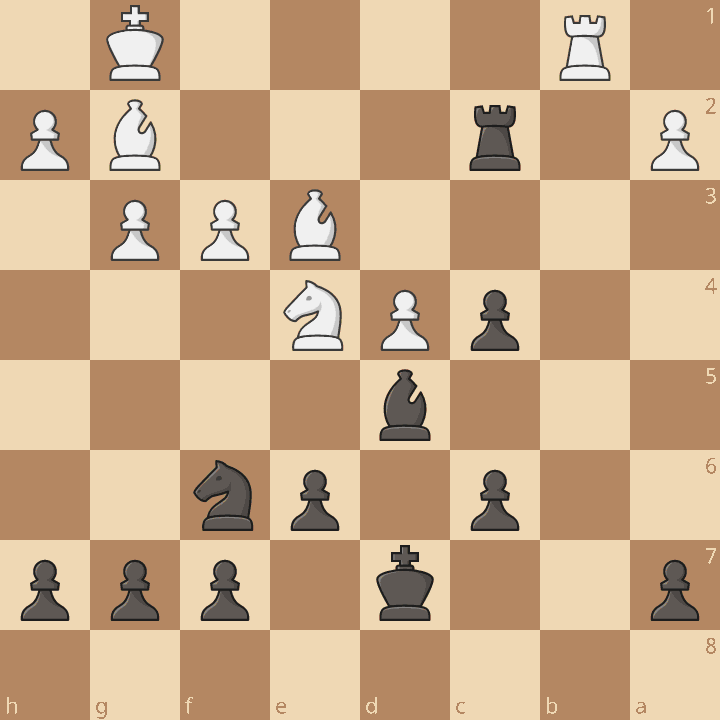
CCT Observations
White’s CCT moves (checks, captures, and threats) that Black should be aware of are:
- 2. Rb7+
- 2. Nxf6+
- 2. Nc5+
For the purpose of this example, you should know that Black has already identified a potential tactical idea: 1… Rxg2+ 2. Kxg2 Nxe4 3. fxe4 Bxe4+, forking the undefended rook on b1 and the exposed White king. It looks promising, but it must be calculated carefully.
The moves black need to calculate are, in order:
- 1. Rxg2+
- 1. Bxe4
- 2. Nxe4
Other moves are either obviously weak or, for now, not critical to calculate.
1. Rxg2+ Variations
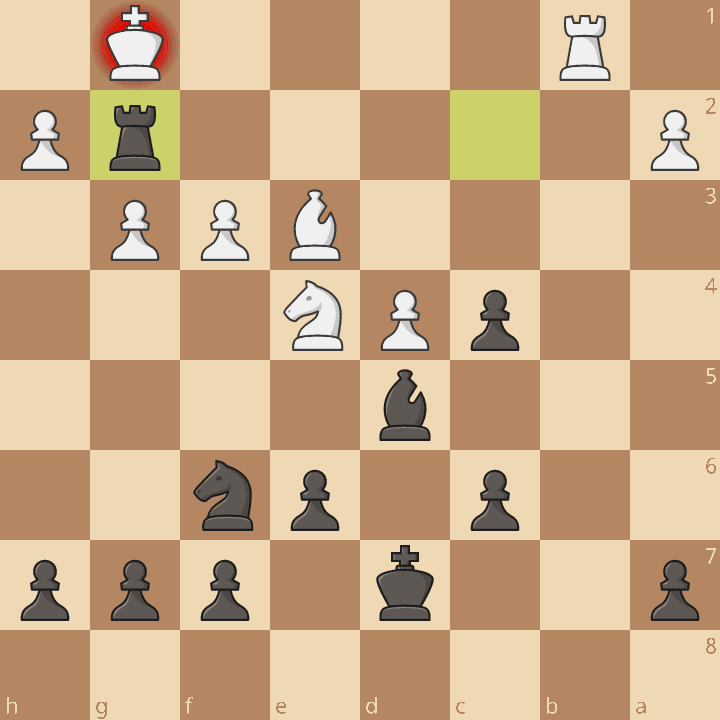
- 1… Rxg2+ 2. Kxg2 (other moves simply gave black the piece) Bxe4 3. fxe4. We can stop calculating here because we need the bishop for the tactic to work, without which the sacrifice doesn’t make sense.
- 1… Rxg2+ 2. Kxg2 Nxe4 3. Rb7+ Kc8 attacking the rook 4. Rxf7 and we can stop calculating here because we clearly have insufficient compensation for our sacrificed material
- Looking at all the forced variations with 1… Rxg2+, we can conclude that they don’t work, but maybe we can change the move-orders?
1. Bxe4 Variations
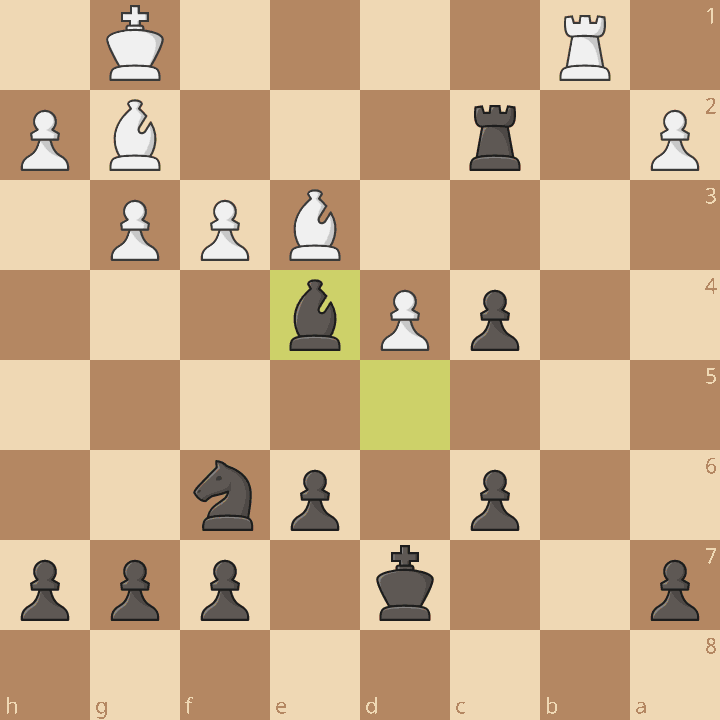
- 1… Bxe4 2. Rb7+ Kc8 attacks the White rook, giving our bishop a chance to be saved. After 3. Rxf7, we can save the bishop with a move like 3… Bd3. Black also has other options here, such as 3… Nd5!, which attacks White’s undefended bishop. However, at this stage we don’t need to calculate that in detail, since we already know this line is playable for us. Still, we must also calculate the other forcing move, 2. fxe4.
- 1… Bxe4 2. fxe4 Rxa2 3. Rb7+ Ke8. That is deep enough. In this case, White still keeps an extra piece, but we at least recover a pawn. This variation might serve as a fallback option if we don’t find anything better.
1. Nxe4 Variations

- 1… Nxe4 2. Rb7+ Kc8 3. Rxf7 Nd6 4. Rxa7 still leaves us happy enough, as we have regained the lost material.
- 1… Nxe4 2. fxe4 Rxg2+ 3. Kxg2 Bxe4+ followed by 4… Bxb1 is even better, giving us a clearly winning position.
Since all the variations after 1… Nxe4 work in our favor, this is the move we should play.
What to Do If You Can’t Calculate to the End
When you can’t calculate all the way to the end—if the position is too complicated or the variations are too deep for your abilities—it’s best to prioritize caution.
It’s usually better to play safe moves rather than give your opponent a potential opportunity they didn’t deserve. The exception is if your position is already bad—in that case, embracing uncertainty can create chances to turn the game around.
Then, of course, continue training your ability to calculate deeper.