Many blunders happen because we focus too much on what our move does and fail to consider what it leaves behind.
We see a threat, a tactical idea, or a plan we want to carry out. As a result, we look at the position mainly from our own perspective.
The following examples show why it is important to build the habit of asking:
What does this move leave behind?
Example 1
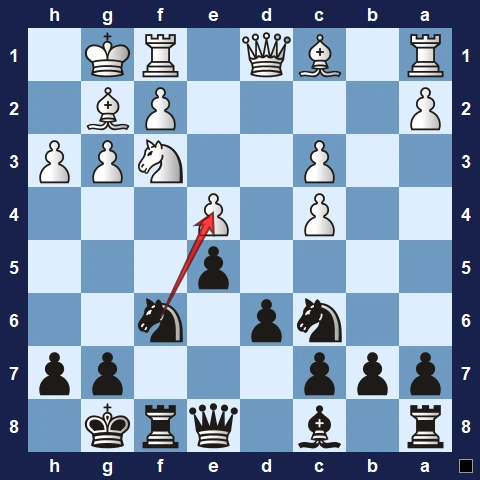
Black is considering 1…Nxe4. The move wins a pawn and even threatens Nxc3. But before playing it, ask yourself:
What does this move leave behind?
After 1…Nxe4, not only is the knight undefended, but it is no longer defending the d5-square, allowing white to play 2. Qd5+ followed by 3. Qxe4.
Example 2
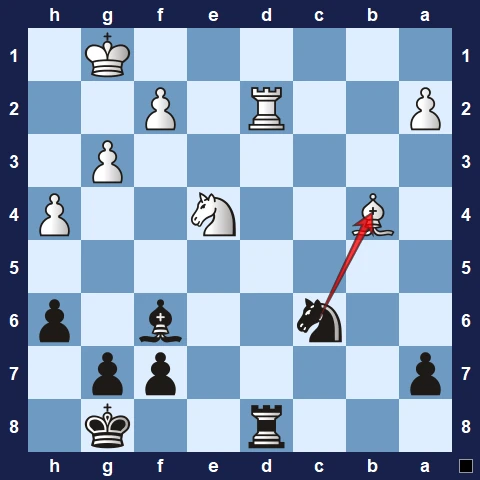
Black intends to capture the seemingly free bishop on h4. Before playing the move, ask the same question:
What does this move leave behind?
The black knight defended the rook on d8, but now after 1… Nxb4? white can remove the other defender with 2. Nxf6+ followed by 3. Rxd8+
Example 3
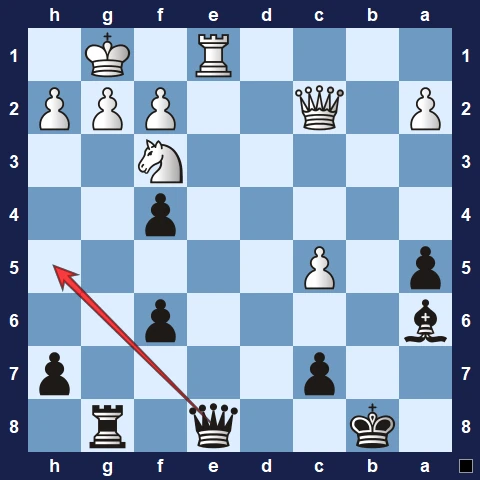
Black intends to play 1… Qh5, threatening 2… Qxf3 because the pawn on g2 is pinned.
What does this move leave behind?
From e8, the black queen defended the rook on g8. But now after 1… Qh5? white can play 2. Qb3+ followed by 3. Qxg8.
These were 3 examples from Blunder Alert – Get the full set here – $10
Developing the habit of checking the downside of moving a piece helps you catch simple mistakes before they turn into costly blunders.
Blunder Alert
Blunder Alert contains 40 practical exercises based on common mistakes from real games, including games played by strong and highly rated players.
The goal is to make the following question a natural part of your thinking process:
What does this move leave behind?
By revisiting the exercises from time to time, you can gradually make this type of blunder check a more natural part of your thinking process.
Included:
✓ 40 blunder-check exercises
✓ Carefully selected practical examples
✓ Positions based on common oversights
Price: $10