This page is an extension of 56 Tactical Patterns That All Chess Players Should Know.
Tactics start with something vulnerable in the position. It might be an undefended piece, an exposed king, or an important defender.
These vulnerable features are called tactical targets.
Once you recognize the target, the tactic becomes easier to understand because a tactical pattern (i.e. a fork, pin, skewer, or discovered attack) is in essence a logical way to exploit targets in the position.
A Simple Example
In the diagram below, Black just played 5…c6?, which is a blunder. White can exploit two targets with one move.
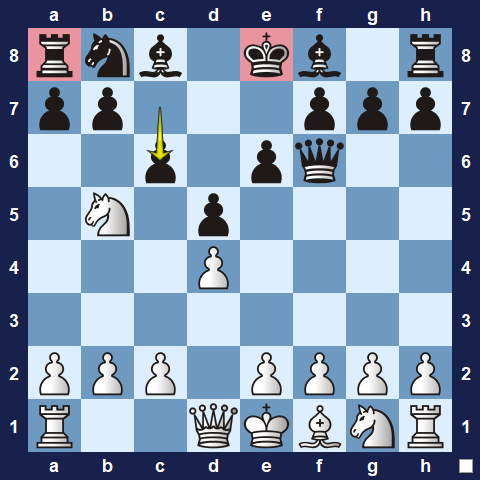
We have here two important targets:
- The king on e8
- The rook on a8
White can play:
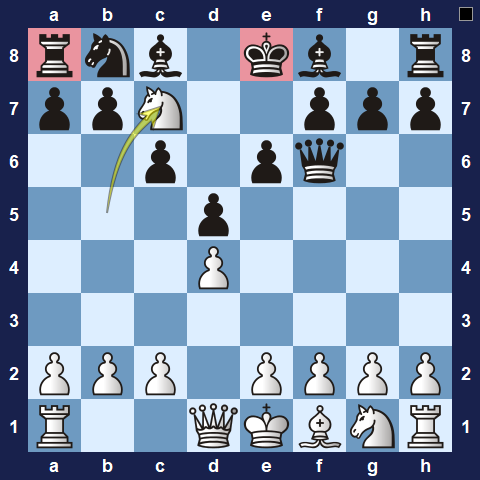
1. Nc7+. This is a fork. The knight gives check to the king and also attacks the rook on a8. Since Black must respond to the check, White will be able to capture the rook next.
The fork was possible because:
- The king was a target because it could be checked.
- The rook was a target because it was valuable and vulnerable.
- The knight was able to attack both targets at the same time.
- Black was not able to deal with both threats at the same time.
Tactical patterns are essentially logical ways to exploit targets.
For example:
- A fork exploits two or more targets that can be attacked at the same time.
- A skewer exploits a valuable piece standing in front of another target.
- A discovered attack exploits a blocked line that can be opened with tempo.
- An overload exploits a defender that has too many responsibilities.
The basic process is the same:
- Identify the targets.
- Look for a logical way to exploit them.
Why Observing Targets are Important
Once you can recognize common targets, it becomes easier to understand the patterns that exploit them. In the tactics section, you’ll find examples of the most important tactical patterns, one by one.
To study these patterns more deeply, 300 Essential Tactical and Checkmate Patterns gives you carefully selected examples organized by theme.