Academy | Tactics
Tactics are moves, or short combinations of moves, that exploit targets in the position to gain an advantage, usually by winning material.
Tactics use common themes, also called motifs or patterns, and rely on accurate calculation to make sure the idea works.
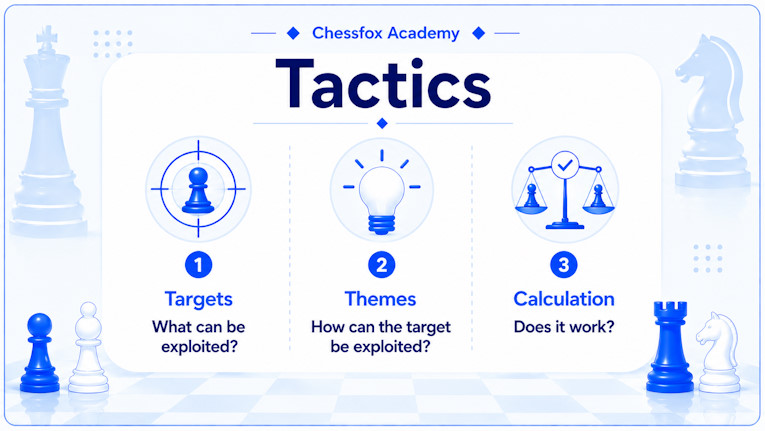
1. Targets — What can be exploited?
Every tactic starts with a target. A target is a weakness or vulnerable point in the position.
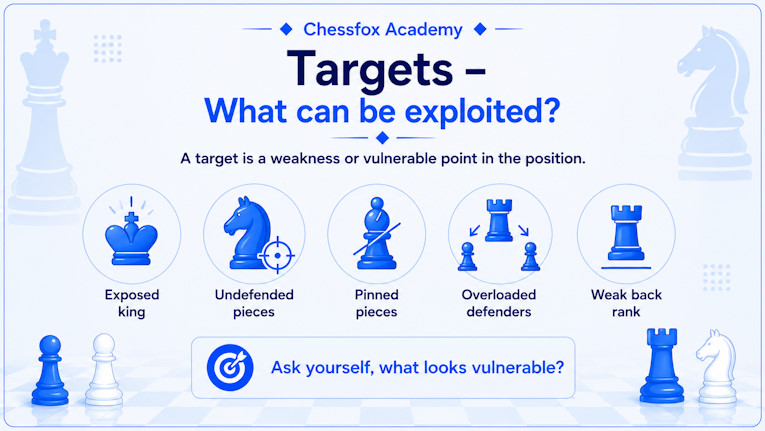
Common targets include:
- an exposed king
- undefended pieces
- pinned pieces
- overloaded defenders
- a weak back rank
When you solve tactical puzzles, make it a habit to first identify the targets in the position. Ask yourself: What looks vulnerable?
2. Themes — How can the targets be exploited?
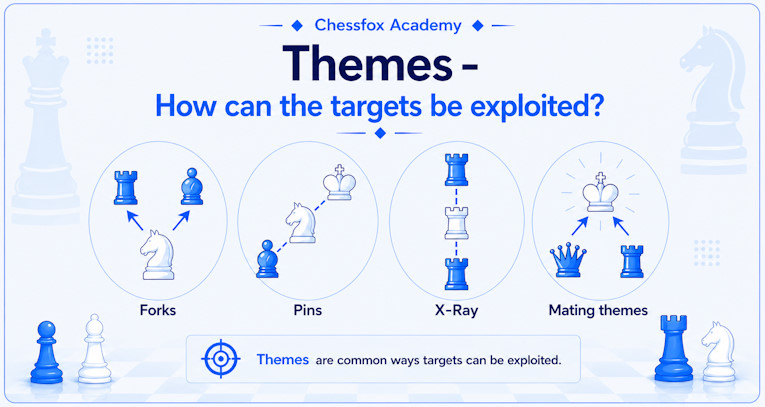
Tactical themes are the common ways targets are exploited.
Examples include:
- forks
- pins
- skewers
- discovered attacks
- deflections
- x-ray
- mating patterns
The more you study the themes and how they exploit targets, the easier it becomes to recognize tactical opportunities during real games. Try to understand why the pattern works in that specific position.
3. Calculation — Does it work?
When you notice a potential tactical idea, you need to check if it actually works. Quite often, your opponent may have defensive resources or a strong counter tactic.
Once you notice a possible tactic, you need to verify the idea and make sure you have not overlooked an important resource your opponent may have.
Focus on Tactics First
Our current focus is on tactics. Later, Chessfox Academy will also include a section dedicated to calculation. But before we can train calculation effectively, we first need to build a solid tactical understanding. That is why, for now, we will focus on tactics first and calculation later.